
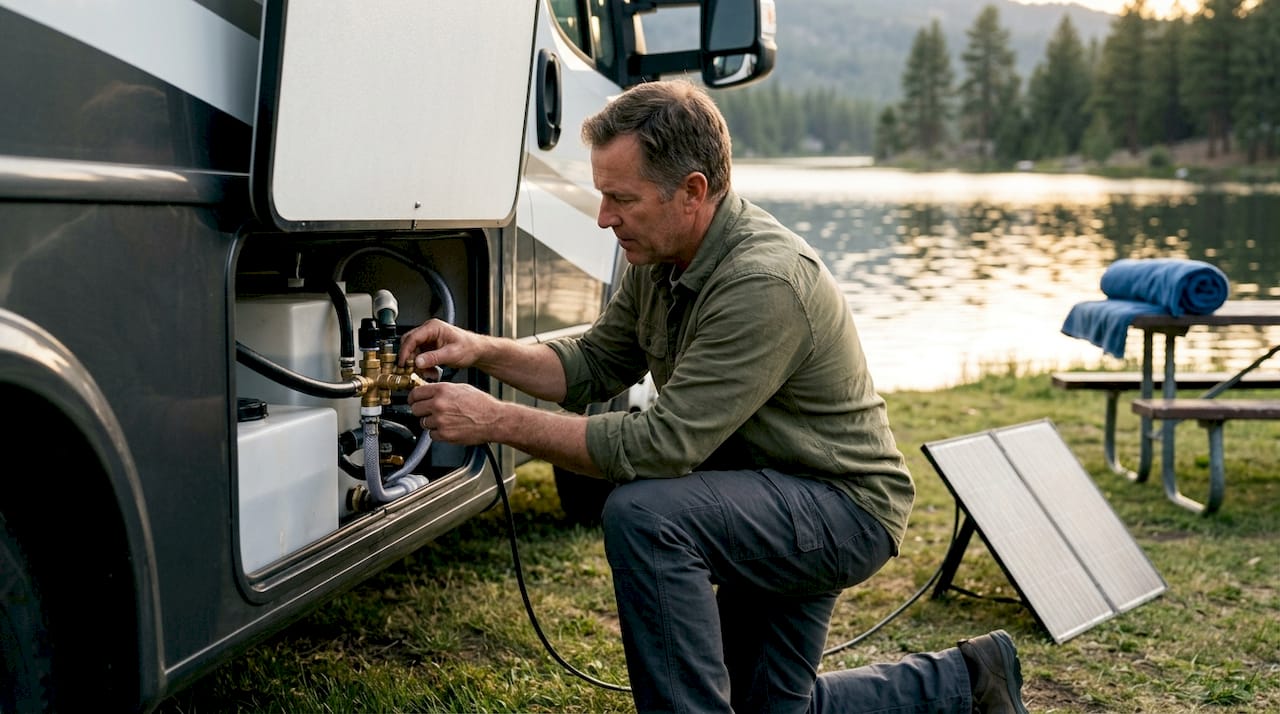
Water conservation in RV sanitation is the practice of reducing freshwater use and managing wastewater to extend off-grid camping duration and protect the environment. The role of water conservation in RV sanitation goes far beyond saving a few gallons. It determines how long you can stay off-grid, how well your holding tanks perform, and how little impact you leave on the land around you. Standard fresh water use for two people averages 9–10 gallons per day, but strict conservation methods can cut that to 2.5–3 gallons per day. That difference can turn a two-day boondocking trip into a week-long adventure.
How does water use affect RV sanitation systems?
Every drop of water you use in your RV ends up in one of three tanks: fresh, gray, or black. Understanding how each tank works is the first step toward managing them well.
- Fresh water tank: Stores your supply for drinking, cooking, showering, and flushing. Most RV fresh tanks hold 30–100 gallons, depending on the rig.
- Gray water tank: Collects wastewater from sinks and showers. This tank fills faster than most RVers expect, especially with standard shower habits.
- Black water tank: Holds toilet waste mixed with flush water. Proper water levels in this tank are critical for waste breakdown and odor control.
The gray tank is actually your tightest constraint. True off-grid independence depends on managing the gray tank as the primary limit, because fresh water conservation alone won’t extend your trip without controlling gray water output. Many RVers focus on how much fresh water they have left, but the gray tank fills first and forces the trip to end. Shifting your focus to gray water output changes how you plan every activity, from washing dishes to brushing your teeth.
Good sanitation practices also protect your system long-term. Odors, sensor malfunctions, and tank buildup all trace back to poor water and waste management habits. Composting toilets and urine-diverting dry flush toilets are gaining traction as alternatives that eliminate black tank reliance entirely, which we cover in detail below.
What are the most effective water conservation techniques for RV sanitation?
Cutting water use in your RV sanitation routine does not require sacrifice. It requires a system. These techniques work together to reduce gray and black tank fill rates while keeping your rig clean and odor-free.
- Switch to navy showers. EPA-standard shower flow is 2.0 gallons per minute. A navy shower, where you wet down, turn off the water, soap up, then rinse, cuts that to under 0.5 gallons per shower. That single change saves more gray water than almost any other habit.
- Capture cold start water. When you turn on the hot water, cold water runs until the heater catches up. Cold start water from the water heater can be captured in a basin and reused for rinsing dishes, flushing the toilet, or watering plants at your campsite.
- Wipe first, wash second. Scrape and wipe cooking pans and plates with a paper towel before washing. This cuts the water and soap needed per dish by more than half and keeps food solids out of your gray tank.
- Use a basin for dishwashing. Fill a small basin with soapy water instead of running the tap. Rinse dishes in a second basin. Two quarts of water can clean a full meal’s worth of dishes for two people.
- Set a daily water budget. Track how many gallons you use each day and monitor your gray tank fill rate. Water conservation works best as a daily routine and budget, not a one-time effort. Tracking gray tank fills gives you real data for trip planning.
- Add enzyme treatments to your tanks. Bacteria and enzyme products break down waste efficiently, reduce odors, and keep sensors accurate. Add them after every dump and after adding water to your black tank.
Pro Tip: Install a low-flow showerhead rated at 1.0 gallons per minute or less. Paired with navy shower technique, this single hardware change can cut your daily gray water output by 3–4 gallons.
What sanitation innovations reduce water use in RVs?

The biggest shift in RV sanitation over the past decade is the move toward low-water and waterless toilet systems. These technologies directly address what experts call the “toilet problem,” which is the dependence on water for flushing and dump stations as the main constraint limiting off-grid freedom.

Composting toilets
Composting toilets operate without flush water, relying instead on moisture balance, airflow, and pH control to break down solid waste. You separate liquids from solids at the source, which prevents the wet, anaerobic conditions that cause odors. Solid waste composts in a chamber with a carbon material like coconut coir or peat moss. Liquid waste goes into a separate bottle that you empty every few days. The result is zero black tank, zero flush water, and no dump station visits for solid waste.
Urine-diverting dry flush toilets
Dry flush toilets use a sealed cartridge system that wraps waste in a foil liner after each use. No water is needed at any point. Each cartridge handles roughly 15–17 uses before replacement. These systems work well in rigs where composting toilet ventilation is difficult to install.
| Feature | Composting toilet | Dry flush toilet |
|---|---|---|
| Water needed | None | None |
| Waste output | Compostable solids, liquid bottle | Sealed cartridge for trash |
| Maintenance | Weekly mixing, liquid emptying | Cartridge replacement |
| Dump station needed | No | No |
| Best for | Long-term boondocking | Shorter trips, tight spaces |
Alternative toilets reduce the need for water, lower waste volume, and increase trip freedom by removing reliance on dump stations entirely. For RVers who camp in remote areas, that freedom is the single biggest quality-of-life upgrade available.
Pro Tip: Before installing a composting toilet, check your RV’s roof for a viable vent pipe location. Proper airflow is the most critical factor in keeping a composting system odor-free.
How do you maintain RV sanitation systems for better water efficiency?
Maintenance is where most RVers lose the gains they made with conservation habits. A poorly maintained system wastes water, generates odors, and gives false tank readings that lead to bad decisions on the road.
- Stop confusing sanitizing with servicing. Sanitizing holding tanks is often unnecessary. Regular servicing with enzyme treatments is more critical for odor control and sensor accuracy than periodic bleach treatments. Save the deep sanitize for spring startup after winter storage.
- Keep the toilet seal wet. Maintaining a water seal in traditional RV toilets prevents odors from rising out of the black tank. A dry seal means odors enter your living space immediately. Check the seal every time you use the toilet and add a small amount of water if the bowl looks dry.
- Clean sensors regularly. Tank sensors read incorrectly when coated in waste residue. Enzyme treatments dissolve buildup over time, but a targeted sensor cleaning wand used monthly keeps readings accurate. Accurate readings prevent you from dumping too early or waiting too long.
- Flush tanks thoroughly at dump stations. Use a tank rinser or built-in flush system to push water through the black tank until it runs clear. This removes residue that enzymes alone cannot break down.
- Spring startup protocol. At the start of each season, sanitize your fresh water tank with a diluted bleach solution, flush it completely, then refill with clean water. Check all hose connections, seals, and the toilet base for cracks or wear.
Consistent maintenance keeps your sanitation system working at full capacity. A well-maintained system uses water more efficiently because it drains completely, reads accurately, and processes waste without buildup slowing things down.
Key Takeaways
Water conservation and sanitation management work together as a single system. Controlling gray water output is the most critical factor in extending off-grid RV trips.
| Point | Details |
|---|---|
| Gray tank is the real limit | Monitor gray water output first. Fresh water supply alone does not determine trip length. |
| Navy showers save the most water | Cutting shower flow below 0.5 gallons per use reduces daily gray water output more than any other single habit. |
| Waterless toilets eliminate dump station dependence | Composting and dry flush toilets remove black tank reliance and extend off-grid freedom significantly. |
| Enzyme treatments beat sanitizing | Regular enzyme use controls odors and keeps sensors accurate better than periodic bleach treatments. |
| Conservation works as a daily budget | Track gray tank fills daily to build accurate trip plans and catch water waste before it ends your stay early. |
What I’ve learned about water and freedom on the road
Most RVers treat water conservation as a comfort sacrifice. I’ve found the opposite is true. The RVers who adopt strict water habits early end up staying longer, stressing less, and enjoying their campsites more. They’re not white-knuckling it through cold showers. They’ve built a routine that feels normal within a day or two.
The real shift happens when you stop thinking about your fresh tank and start watching your gray tank. That mental switch changes everything. You start noticing how much water runs while you wait for the soap to rinse off a pan. You start capturing that cold start water without thinking about it. You start seeing your RV sanitation system as a closed loop you manage, not a problem you react to.
The toilet question is the one most RVers avoid until it forces their hand. Dump station fees, limited campsite availability, and the sheer inconvenience of planning around black tank capacity are all solvable problems. Composting toilets are not for everyone, but for serious boondockers, they are the single biggest upgrade available. I’ve watched RVers go from three-day trips to three-week trips after making that one change.
Water conservation is not about deprivation. It’s about control. The more precisely you manage your water and waste, the more freedom you have to go where you want and stay as long as you like.
— Rvlevitator
How Rvlevitator supports your RV sanitation setup
Good water conservation habits only work when your waste system functions reliably from tank to dump point. A sagging or unprotected sewer hose undermines every conservation effort you make inside the rig.

Rvlevitator designs sewer hose support systems that keep your waste line elevated and draining properly on any terrain. No sagging means no backflow, no pooling, and no messy disconnects at the dump station. The support system installs in minutes and works on uneven ground where standard supports fail. Pair it with a sewer hose cover to protect your hose from UV damage, wildlife, and road debris between uses. Rvlevitator backs every product with a money-back guarantee, so you can try it risk-free on your next trip.
FAQ
What is the role of water conservation in RV sanitation?
Water conservation in RV sanitation reduces freshwater consumption and slows the fill rate of gray and black tanks, directly extending how long you can camp off-grid without needing a dump station or water hookup.
How much water does an RV use per day?
Two people in an RV average 9–10 gallons per day under normal use. Strict conservation techniques can reduce that to 2.5–3 gallons per day.
Why does the gray tank fill faster than the fresh tank empties?
Gray water accumulates from showers, sinks, and dishwashing simultaneously, while fresh water use is spread across more activities. The gray tank becomes the limiting factor in off-grid trips before the fresh tank runs dry.
Do composting toilets really eliminate the need for a dump station?
Yes. Composting toilets require no flush water and produce no black tank waste, so solid waste never goes to a dump station. Liquid waste empties into any standard toilet or gray water disposal point.
How often should I use enzyme treatments in my RV tanks?
Add enzyme treatments after every dump and after refilling the black tank with water. Consistent use prevents buildup, controls odors, and keeps tank sensors reading accurately throughout the season.
Recommended
Article generated by BabyLoveGrowth
Tired of fighting your sewer hose setup? The Levitator suspends your hose above any terrain: no sags, no pooling, no smell. See how it works or shop the lineup.