
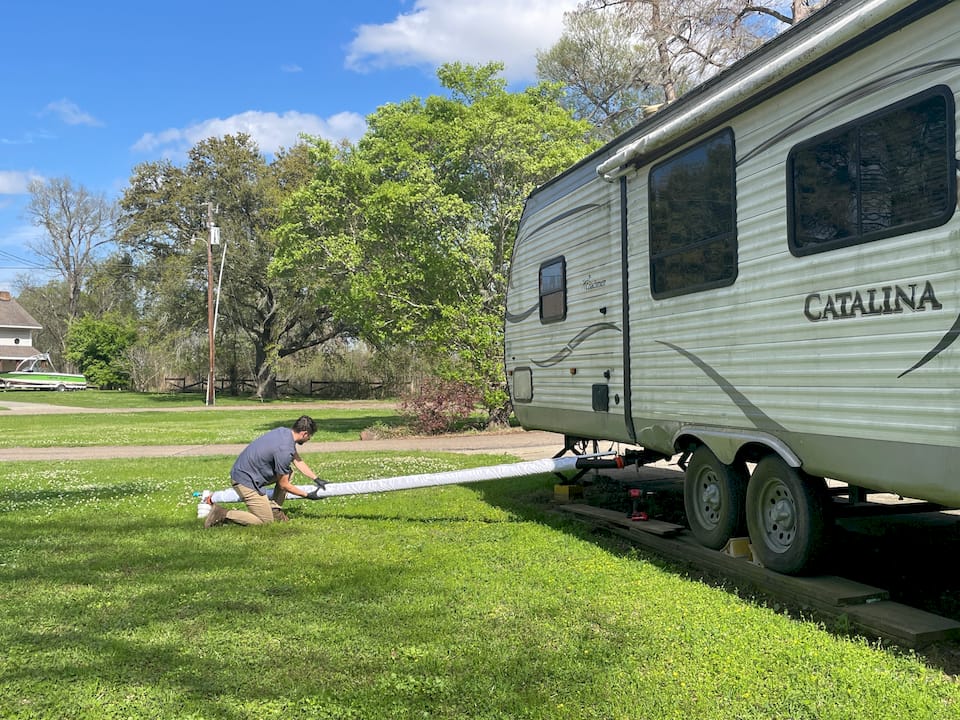
RV extended travel waste management is the practice of handling black and gray water disposal efficiently to maintain sanitation and comfort during long trips. Most RV waste problems, including clogs, odors, and sensor failures, come from owner habits rather than faulty equipment. The good news: a consistent routine fixes nearly all of them. This guide covers optimal dump timing, flushing techniques, off-grid strategies, and the right gear to keep your system running clean for weeks or months on the road.
How often should you dump your RV tanks during extended travel?
Experts recommend dumping your black tank when it reaches two-thirds capacity or every 3–5 days during active use. Waiting until the tank is completely full makes solids harder to flush out and increases the risk of clogs.
After every dump, deep flushing is not optional. Insufficient flushing causes most black tank issues, including “pyramiding,” where solids stack up and harden near the valve. A partial dump without a rinse leaves residue that builds up over time and eventually blocks sensors and valves.
Follow these steps for a thorough dump and flush cycle:
- Dump the black tank first, then close the valve.
- Rinse the black tank using your built-in flush port or a tank rinser wand.
- Dump the gray tank last. Gray water flushes the sewer hose and termination assembly.
- Use the two-step rinse method by lifting the sewer hose during the gray water rinse. This floods the valve housing with gray water for 10–15 seconds, clearing residue and reducing odors.
- Close all valves and disconnect the hose.
Pro Tip: Fill your black tank one-third full of fresh water before a long drive. The sloshing motion agitates and loosens residue, making your next flush far more effective.
Gray tanks fill faster than you expect. Track them separately from your black tank because gray water from showers and dishes often reaches capacity first. A clear elbow connector at the dump station lets you watch the flow and confirm both tanks drain completely.
What tools are essential for hassle-free RV waste management?
The right gear makes every dump faster, cleaner, and safer. Here is what belongs in every extended traveler’s kit:
- Sewer hose kit: A 20-foot kit with connectors covers most campsite distances. Carry a 10-foot extension for longer runs.
- Clear elbow connector: Costs around $12–$18 and lets you see when the tank is fully drained. This single item prevents the guesswork that leads to premature disconnection.
- Sewer hose support: Keeps the hose elevated at a consistent downward angle so waste flows by gravity, not pooling. Rvlevitator’s support system works on uneven terrain, which is the exact condition most campgrounds offer.
- Disposable gloves: Nitrile gloves protect your hands during every connection and disconnection.
- Tank treatment tablets or liquid: Enzyme-based treatments break down solids and control odor between dumps.
- Backflow preventer: Stops sewer gas and waste from flowing back into your hose connection. The RV backflow preventer from Rvlevitator attaches directly to your termination fitting.
Pro Tip: Pack a dedicated waste management bag with all these items together. You will never scramble for gloves or a connector at a busy dump station again.
Backup equipment matters on long trips. Carry a spare hose section and an extra set of connectors. Hoses crack in cold weather and UV exposure degrades them faster than most travelers expect. Replacing a failed hose at a remote campground is far harder than carrying a spare.

How do you manage RV waste while boondocking off-grid?
Off-grid waste management requires a different mindset than campground travel. You have no hookups and no nearby dump stations, so every gallon counts.

Gray water reaches capacity before the black tank in most off-grid setups. Dishes, handwashing, and showers fill the gray tank quickly. Reduce that load by washing dishes in a small basin and pouring the basin water into the black tank, or by using biodegradable soap and minimal rinse water. Shorter showers and a low-flow showerhead extend your gray tank interval by days.
For the black tank, composting toilets are a real alternative for full-time or extended travelers. Solid waste bins need emptying every 2–4 weeks in warm weather and every 10–14 days in cold weather. Liquid containers require daily emptying. That schedule demands discipline, but it eliminates the black tank entirely and reduces dump station dependency.
Key habits for off-grid waste management:
- Keep gray and black tank valves closed until you dump. Never leave them open, which dries out solids in the black tank.
- Plan your route around certified dump stations. Apps like Campendium and the RV LIFE Trip Planner show dump station locations along your path.
- Use water-saving habits consistently, not just when tanks are nearly full.
- Check your tank levels every morning so you are never caught off guard.
Boondockers must verify land manager regulations before disposing of any gray or black water. Environmental compliance is a legal requirement, not a suggestion. Many wilderness areas prohibit gray water dumping on the ground, even with biodegradable soap. Fines and permit revocations are real consequences for violations.
What are common RV waste system problems and how do you fix them?
Most black tank problems trace back to insufficient flushing and low water use, not broken hardware. Knowing that changes how you approach every issue.
Here are the most common problems and their fixes:
- Pyramiding: Solids stack up near the valve when the tank is dumped too early or without enough water. Fix it by filling the tank halfway with water, adding a tank treatment, and letting it sit overnight. Drive the next day to agitate the contents, then dump and flush thoroughly.
- Persistent odors: Odors mean residue is sitting in the tank or hose. A deep flush cycle using the two-step gray water rinse method clears most odors. For odor-free RV living, check that your roof vent cap is clear and your tank treatment is enzyme-based, not just a deodorizer.
- Sensor errors: Sensors read “full” even after dumping. Sensor errors mainly result from solids coating the sensor probes, not sensor failure. A thorough flush cycle usually clears them. If not, a sensor cleaning wand inserted through the flush port scrubs the probes directly.
- Slow drainage: A sagging sewer hose traps waste and slows flow. Elevate the hose at a consistent downward angle using a hose support. Check for common sewer support mistakes that reduce drainage efficiency.
- Valve leaks: Inspect gate valves for debris caught in the seal. Lubricate the valve blade with a silicone-based lubricant every few months. If the valve leaks consistently, replace it before your next long trip.
Pro Tip: Always use enough water in your black tank. A good rule is one gallon of water per flush. Low water use is the single biggest cause of pyramiding and sensor failure.
When should you call a professional? If a valve is cracked, a fitting is broken, or you smell sewer gas inside the RV after checking all connections, stop using the system and get a certified RV technician to inspect it. Internal sewer gas is a health risk.
How do you build an efficient waste management routine for long trips?
A solid routine removes the stress from RV sanitation management. Start every trip with empty tanks and a planned dump station route.
Here is a practical weekly routine for extended travelers:
- Day 1: Depart with empty black and gray tanks. Add 2–3 gallons of water and a tank treatment tablet to the black tank before use.
- Days 2–4: Monitor tank levels daily. Keep gray and black valves closed.
- Day 3–5: Dump when the black tank hits two-thirds full. Complete the full flush cycle.
- After every dump: Refill the black tank with a few gallons of fresh water and a new treatment tablet.
- Weekly: Inspect hose connections, check for cracks in the sewer hose, and wipe down fittings.
Your dedicated waste management kit should include:
| Item | Purpose |
|---|---|
| Sewer hose with extensions | Reaches dump station connections at any distance |
| Clear elbow connector | Confirms complete drainage visually |
| Hose support system | Maintains downhill flow angle on uneven ground |
| Nitrile gloves (box) | Protects hands during every connection |
| Enzyme tank treatment | Breaks down solids and controls odor between dumps |
| Backflow preventer | Blocks sewer gas from entering the hose connection |
Tracking your tanks separately is non-negotiable on long trips. Gray tanks fill faster, and missing that detail leads to overflow or an unplanned stop. A simple notebook log or a tank monitor app keeps both levels visible at a glance.
Key Takeaways
Effective RV sanitation management on long trips requires consistent dump timing, thorough flushing after every dump, the right gear, and a planned routine before you leave home.
| Point | Details |
|---|---|
| Dump at two-thirds capacity | Dump the black tank every 3–5 days or at two-thirds full to prevent clogs and pyramiding. |
| Always flush after dumping | Deep flushing after every dump prevents sensor failure, odors, and residue buildup. |
| Track gray and black tanks separately | Gray tanks fill faster; monitor both daily to avoid overflow on extended trips. |
| Carry the right gear | A clear elbow connector, hose support, and backflow preventer make every dump safer and cleaner. |
| Plan dump stops before you leave | Map certified dump stations along your route so off-grid travel never leaves you stranded. |
What I have learned about RV waste management after years on the road
Most RVers treat waste management as a problem to solve when something goes wrong. That reactive approach is why so many people deal with clogs, odors, and sensor failures that could have been avoided entirely.
The real shift happens when you treat your waste system like any other mechanical system in your RV. You check your tire pressure before a trip. You check your oil. Your black tank deserves the same attention. A five-minute flush routine after every dump prevents 90% of the issues I see people troubleshoot for hours.
Off-grid travel taught me something specific: gray water is the sneaky problem. Everyone worries about the black tank, but the gray tank fills up first and catches you off guard. Tracking both tanks separately changed how I plan every trip.
The other thing I want RVers to know is that the gear matters more than most people admit. A sagging sewer hose does not drain properly, full stop. Waste pools in the low spots, odors develop, and the hose degrades faster. A quality hose support system is not a luxury item. It is the difference between a clean dump and a messy one, especially on uneven terrain.
Proactive care is not complicated. It is just consistent. Build the routine, carry the right tools, and your waste system will give you no trouble for thousands of miles.
— Rvlevitator
How Rvlevitator supports your extended travel waste system
Managing waste on a long trip gets easier when your equipment works reliably every time you pull into a dump station.

Rvlevitator designs sewer hose support systems that hold your hose at a consistent downhill angle regardless of the ground beneath it. Uneven terrain is the norm at most campgrounds, and a sagging hose means incomplete drainage and faster wear. Rvlevitator’s supports install in minutes and protect your hose from UV exposure, ground abrasion, and wildlife damage. Pair the support with the RV backflow preventer to block sewer gas at the connection point. Every product comes with a money-back guarantee, so you can try it on your next trip with zero risk.
FAQ
How often should I dump my RV black tank on a long trip?
Dump your black tank when it reaches two-thirds capacity or every 3–5 days during active use. Waiting until it is completely full makes solids harder to flush out.
What causes RV black tank sensor errors?
Sensor errors are caused by solids coating the sensor probes from insufficient flushing, not hardware failure. A thorough flush cycle or a sensor cleaning wand clears most errors.
Can I dump gray water on the ground while boondocking?
Many wilderness areas prohibit gray water dumping on the ground even with biodegradable soap. Always verify land manager regulations before disposing of any gray water off-grid.
How do composting toilets work for extended RV travel?
Composting toilets separate liquid and solid waste. Solid bins need emptying every 2–4 weeks in warm weather and every 10–14 days in cold weather, with liquid containers requiring daily emptying.
Why does my sewer hose drain slowly?
A sagging hose traps waste and slows drainage. Use a hose support to maintain a consistent downhill angle from your RV to the dump station connection.
Recommended
- RV Sewer Support Mistakes –
- DIY RV Maintenance Tips for Beginners –
- Tips for Odor Free RV Living –
- RV Levitator RV Sewer Hose Support Featured in RVBusiness.com –
Article generated by BabyLoveGrowth
Tired of fighting your sewer hose setup? The Levitator suspends your hose above any terrain: no sags, no pooling, no smell. See how it works or shop the lineup.