
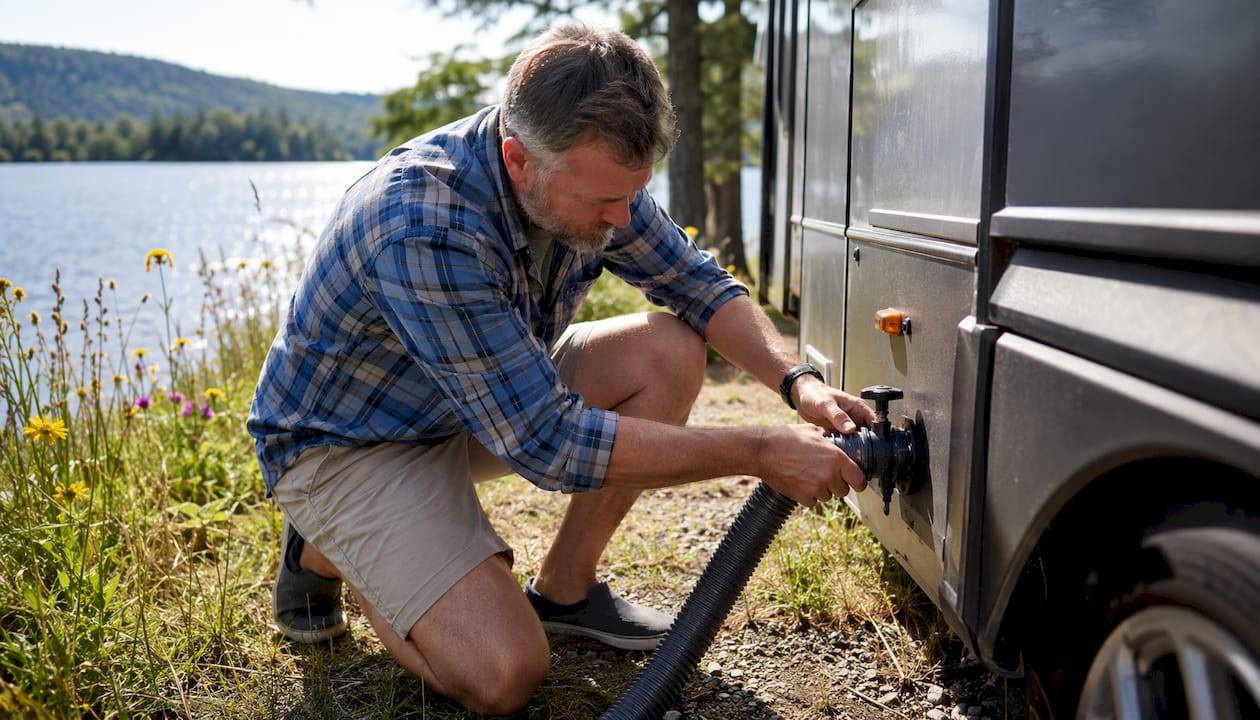
RV remote location waste disposal is defined as the legal and sanitary management of black water and gray water produced by your RV during off-grid or boondocking trips. Getting this right protects waterways, keeps you on the right side of federal and state law, and preserves the wild places you drove hours to reach. Fines for improper dumping range from $500 to $25,000 depending on jurisdiction and severity. That range alone makes preparation non-negotiable. This guide covers the core methods, legal standards, and gear choices that make remote camping waste disposal manageable on any trip.
What are the main types of RV waste in remote locations?
RV waste falls into two categories: black water and gray water. Black water is sewage from your toilet, containing human waste and toilet paper. Gray water comes from sinks, showers, and kitchen drains. It contains soap, food particles, and grease. Both require careful handling when you are miles from a dump station.
Tank capacity varies widely by RV size. Most rigs carry 30–50 gallons of black water capacity and a similar or slightly larger gray water tank. Off-grid autonomy typically runs 3–7 days before you need to dump, depending on how many people are using the RV and how conservatively you manage water. That window shrinks fast with a family of four.
The challenges in remote areas are specific:
- No hookups. You cannot drain continuously as you would at a full-service campsite.
- No nearby dump stations. The nearest station may be 30–60 miles away on a boondocking trip.
- Terrain issues. Uneven ground makes connecting and draining a sewer hose harder and messier.
- Environmental sensitivity. Many remote sites sit near streams, lakes, or fragile desert soil where contamination causes lasting damage.
Gray water gets less attention than black water, but contamination prevention is the primary goal of remote RV waste management. Restrictions on gray water dumping are increasing across federal and state lands. Treating gray water as casually as dishwater is a mistake that can cost you a fine and damage the ecosystem around your campsite.
What are the legal requirements for remote RV waste disposal?
Federal law sets the baseline. The Clean Water Act prohibits discharging pollutants, including untreated sewage and gray water, into navigable waters or their tributaries. National parks and Bureau of Land Management areas layer additional rules on top of that baseline. State rules vary: California, Florida, and Texas each have their own penalties and buffer requirements for waste disposal near water.

The universal standard for cathole disposal requires digging 6–8 inches deep and at least 200 feet from any water source, trail, or campsite. That 200-foot buffer is not a suggestion. It is the minimum distance recognized by the National Park Service and Leave No Trace guidelines to prevent contamination of surface water and soil.
Leave No Trace principles add practical guidance beyond the legal minimum:
- Bury solid human waste in a cathole 6–8 inches deep in organic soil where digging is permitted.
- Pack out all toilet paper in a sealed bag rather than burying it. Buried toilet paper is frequently dug up by wildlife or fails to decompose in dry or alpine conditions.
- Never dump gray water within 200 feet of a water source, trail, or campsite.
- In high-use areas, alpine zones, or desert terrain, pack out all human waste using a WAG bag system.
- Check local regulations before every trip. Rules differ between national forests, BLM land, state parks, and tribal lands.
Penalties for ignoring these rules are real. Improper dumping violations carry fines from $500 to $25,000. Repeat offenders or cases involving direct water contamination land at the high end of that range. Ignorance of local rules is not a legal defense.
How do you safely dispose of RV waste in remote locations?
The method you use depends on your terrain, the regulations in your area, and how long you plan to stay. Here are the main disposal options for RVers in remote settings.
Cathole method
The cathole works in areas with organic soil where burying is permitted. Dig 6–8 inches deep, at least 200 feet from water, trails, and your campsite. After use, mix in a small amount of soil to speed decomposition, then fill and disguise the hole. This method works well in forested areas with rich topsoil. It does not work in alpine zones, sandy desert, or high-traffic areas where soil cannot break down waste effectively.

WAG bags
WAG bags (Waste Alleviation and Gelling bags) use a gelling powder that neutralizes odors and solidifies waste for pack-out. In alpine, desert, or high-traffic zones, WAG bags are the required or strongly preferred method. They are also the right choice any time you are unsure whether burying is permitted. Pack used WAG bags in a sealed outer bag and dispose of them at a designated waste receptacle or dump station.
Portable waste tanks
A portable waste tank (sometimes called a “tote tank”) lets you transport black water from your RV to a dump station without moving your entire rig. This is especially useful when you are parked at a remote site for several days. Fill the portable tank from your RV’s black tank valve, then haul it to the nearest dump station. Check your state’s transport regulations before using one, as some states require specific containment standards.
Dump station procedure
When you reach a dump station, order matters. Always empty the black tank first, then open the gray tank. The soapy gray water flushes the sewer hose and clears residue from the black tank connection. That sequence reduces odors and keeps your hose cleaner after every dump.
Pro Tip: After opening the gray tank, lift the sewer hose mid-way to create a backflow effect. This pushes gray water back toward the black tank valve housing and rinses out solids that cling to the valve, reducing buildup and odor over time.
A quick comparison of remote disposal methods:
| Method | Best for | Key limitation |
|---|---|---|
| Cathole | Forested areas with organic soil | Prohibited in alpine, desert, high-use zones |
| WAG bag | All terrain, especially restricted areas | Requires pack-out to a dump receptacle |
| Portable waste tank | Extended stays at a fixed remote site | Requires transport to a dump station |
| Drive to dump station | Any situation with tank capacity remaining | Requires moving the RV or tow vehicle |
How do you plan and equip for extended remote waste management?
Planning your waste management before you leave is what separates a comfortable boondocking trip from a stressful one. The right gear and habits extend your off-grid time and keep you legal throughout.
Monitor your tanks consistently
Check black and gray tank levels every morning. Most RV monitors give a rough reading, but sensors can be unreliable if solids coat them. Keep a mental log of daily usage and plan your dump stop before the tanks hit capacity. Overflow is messy, expensive to clean, and potentially illegal if it reaches the ground.
Keeping the black tank valve closed until the tank is full is the right approach. A full black tank maintains proper solids flotation, which prevents buildup and makes dumping cleaner. Opening the valve too early lets liquids drain while solids dry and harden against the tank walls.
Gear that makes a real difference
- Portable waste tank: A 15–25 gallon tote tank gives you flexibility without moving your rig.
- Sewer hose support: A quality support system keeps your hose elevated and draining at a consistent angle, even on uneven terrain. Rvlevitator’s support system is built to work on any ground condition, preventing sagging and protecting the hose from rocks, rodents, and UV exposure. You can find dump station hose setup guidance to pair with the right support gear.
- WAG bags: Carry at least one per person per day beyond your expected trip length.
- Biodegradable soap: Reduces the environmental impact of gray water if any surface disposal is permitted in your area.
- GPS or app for dump stations: Apps like Campendium and iOverlander show user-reported dump station locations. Confirm hours and fees before you drive to one.
Water conservation extends your autonomy
Reducing water use directly extends how long you can stay off-grid. Shorter showers, turning off the tap while brushing teeth, and using a basin for dishwashing all reduce gray water output. For a deeper look at water conservation paired with RV sanitation practices, the connection between the two is tighter than most RVers realize.
Pro Tip: Use a spray bottle instead of running the faucet for quick rinses. This single habit can cut your gray water production by a meaningful amount on a week-long trip.
Valve and hose maintenance
Inspect your black tank valve and sewer hose connections before every trip. A leaking valve or cracked hose fitting turns a routine dump into a serious problem. Lubricate the valve blade with a silicone-based lubricant twice a season. Replace hoses that show cracking, soft spots, or discoloration. For a full breakdown of RV waste drainage practices, proper maintenance is the foundation of every clean dump.
What I have learned from years of boondocking
After years of remote RV trips, the biggest lesson is this: most waste disposal problems are planning failures, not equipment failures. RVers who run into trouble usually skipped the research on local regulations, underestimated how fast tanks fill with multiple people, or brought gear that did not hold up on rough terrain.
The gray water rules catch people off guard most often. Many RVers assume gray water is harmless and dump it freely near their site. Federal land managers disagree, and the fines reflect that. Treat gray water with the same seriousness as black water, especially near any water source.
WAG bags feel like overkill until you camp in a slot canyon or above the tree line where there is no soil to dig into. Carry them on every trip. You will use them eventually, and having them means you never have to make a bad decision under pressure.
The right sewer hose support changes the dump station experience more than most RVers expect. A hose that sags or sits on gravel drains poorly, picks up contamination, and wears out faster. Rvlevitator’s support system solves that problem on any surface, and the difference shows up immediately in cleaner, faster dumps.
Respect the land, know the rules for wherever you are camping, and bring the right gear. That combination makes remote waste disposal a non-issue instead of the thing that cuts your trip short.
— Rvlevitator
Gear that supports a cleaner dump every time
Proper waste disposal in remote locations depends on more than technique. The equipment connecting your RV to the dump station matters just as much.

Rvlevitator’s sewer hose support products are built to keep your hose elevated and draining correctly on any terrain, from gravel pull-throughs to sloped desert sites. The support system protects the hose from ground contact, UV damage, and physical wear, which extends hose life and keeps connections tight. Setup takes minutes, and the money-back guarantee means you can try it without risk. For RVers who want to see all available sewer hose support options before choosing, Rvlevitator has a full range to match any rig and any trip length.
Key Takeaways
Proper RV remote location waste disposal requires knowing your tank limits, following federal buffer rules, using the right method for your terrain, and maintaining your hose and valve equipment before every trip.
| Point | Details |
|---|---|
| Know your tank autonomy | Off-grid trips typically last 3–7 days before requiring a dump stop. |
| Follow the 200-foot rule | Keep all waste disposal at least 200 feet from water, trails, and campsites. |
| Use WAG bags in restricted zones | Alpine, desert, and high-traffic areas require pack-out; burying is prohibited or ineffective. |
| Dump black tank first | Empty black water before gray to flush the hose and reduce odors naturally. |
| Support your sewer hose | A proper hose support prevents sagging, speeds drainage, and extends hose life on uneven terrain. |
FAQ
What is RV remote location waste disposal?
RV remote location waste disposal is the practice of managing black water and gray water from your RV’s holding tanks safely and legally when no hookups or dump stations are immediately available. Methods include portable waste tanks, cathole disposal, WAG bags, and driving to the nearest approved dump station.
How long can an RV go without dumping off-grid?
Most RVs last 3–7 days off-grid before tanks reach capacity, depending on the number of occupants and water conservation habits. Reducing shower time and faucet use extends that window significantly.
Can you dump gray water on the ground when camping remotely?
Gray water dumping on the ground is restricted or prohibited on most federal and state lands. Leave No Trace guidelines require a 200-foot buffer from water sources, and many areas ban surface disposal entirely. Always check local regulations before dumping any wastewater.
What happens if you dump RV waste illegally?
Illegal dumping carries fines from $500 to $25,000 depending on the violation type and jurisdiction. Cases involving direct contamination of water sources land at the high end of that range.
Do you need a sewer hose support for remote RV trips?
A sewer hose support is not legally required, but it prevents sagging that causes poor drainage, odors, and hose damage on uneven terrain. Rvlevitator’s support system works on any ground condition and makes every dump station stop faster and cleaner.
Recommended
- RV Dry Camping Waste Management Explained
- RV Extended Travel Waste Management: A Practical Guide
- RV Waste Drainage Best Practices for Cleaner Trips
- RV Portable Waste Tank: A First-Timer’s Guide
Tired of fighting your sewer hose setup? The Levitator suspends your hose above any terrain: no sags, no pooling, no smell. See how it works or shop the lineup.