
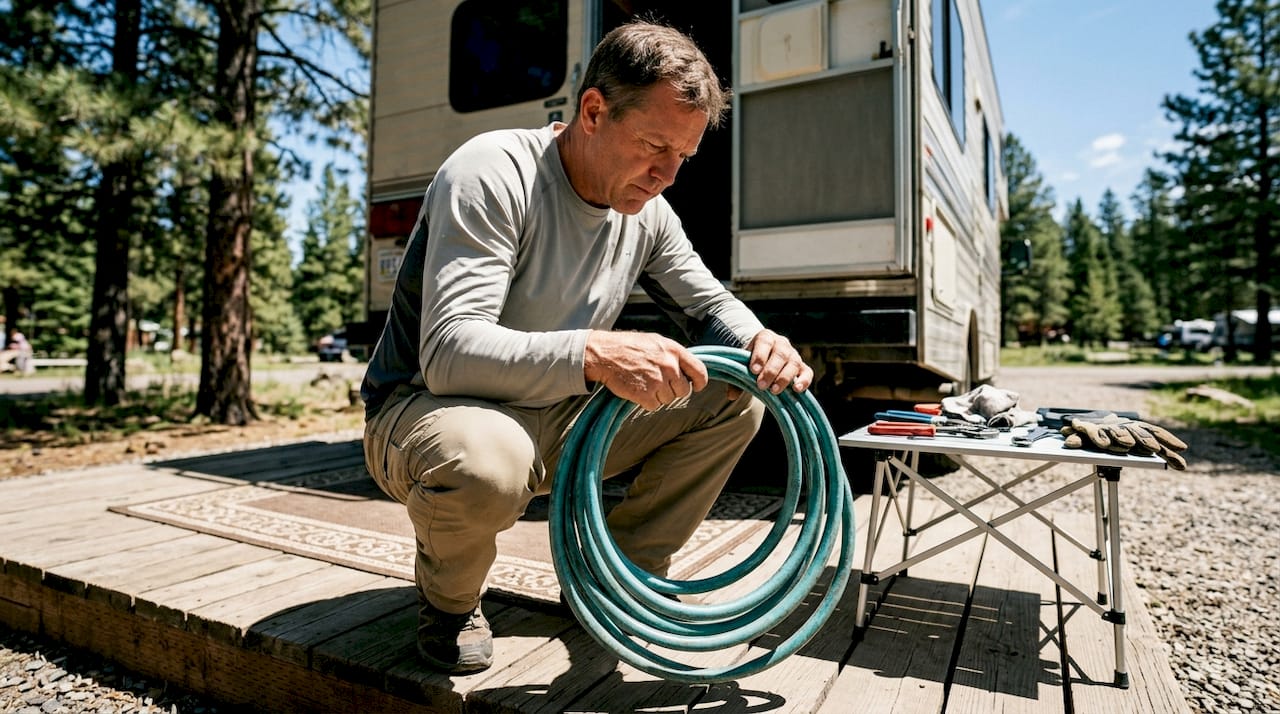
RV hose maintenance best practices are the foundation of a sanitary, trouble-free camping experience. Proper care covers everything from selecting NSF/ANSI-61 certified hoses to protecting sewer lines from UV dry rot and terrain-related sagging. Skip these steps and you risk contaminated water, cracked hoses, and messy drainage failures at the worst possible moment. Whether you camp on flat pavement or rocky backcountry sites, the right routine keeps your system running clean and your hoses lasting for years.
1. What are the essential materials and tools for RV hose maintenance?
The right hose starts with the right certification. Fresh water hoses must carry NSF/ANSI-61 and NSF/ANSI-372 ratings, which confirm the hose is safe for drinking water and free of harmful lead levels. Non-certified hoses can leach plasticizers and heavy metals directly into your water supply. That is a health risk no campsite convenience is worth.
Material choice matters just as much as certification. Here is how the main options compare:
- Hybrid polymer: Lightweight, kink-resistant, and easy to coil. Best for everyday fresh water use.
- Polyurethane: Flexible even in cold temperatures. Holds up well in winter camping conditions.
- Rubber: Heavy and durable. Handles high-pressure connections without fatigue.
- Reinforced PVC: Budget-friendly but stiffens in cold weather and degrades faster under UV exposure.
Beyond the hose itself, you need a short list of tools to do the job right:
- A dedicated cleaning brush sized for your hose diameter
- Unscented household bleach for sanitizing solutions
- A pressure regulator to protect fittings from campground water surges
- Hose covers to block UV rays and keep pests out
- Separate storage bags for potable and waste hoses
Pro Tip: Always flush a new fresh water hose for at least two minutes before connecting it to your RV. This clears manufacturing residue and any contaminants picked up during shipping.
2. How to properly clean and sanitize your RV sewer hose
Sanitization is not optional. The standard procedure uses 1 ounce of bleach per 10 gallons of tank capacity, mixed into a solution that runs through the entire water system. The bleach concentration is low enough to be safe but strong enough to kill microbial growth that builds up during storage or travel.
Follow these steps for a thorough clean:
- Drain the system completely. Empty tanks and lines before introducing any sanitizing solution.
- Mix the bleach solution. Use unscented bleach only. Scented varieties leave residue that affects water taste.
- Fill and distribute. Run the solution through every faucet, showerhead, and toilet until you smell bleach at each outlet.
- Wait the full contact time. The minimum is 4 hours. Overnight soaking is the gold standard for killing stubborn bacteria.
- Flush thoroughly. Run fresh water through the system until the bleach smell is completely gone.
- Inspect the hose. Check for cracks, soft spots, or discoloration while the hose is wet and easy to examine.
Sanitization frequency should happen at least every 12 months, or after any storage period exceeding 45 days. Full-timers and frequent travelers should refresh the process every six months because variable campground water sources introduce different bacterial loads each time.
Pro Tip: Never use scented bleach or bleach-based cleaning products with added surfactants. They leave behind residues that are difficult to flush out and can cause gastrointestinal irritation.
3. What are the best RV hose protection methods to prevent damage?
UV exposure is the number one killer of sewer hoses. Leaving a sewer hose in direct sun can cause UV-induced dry rot within a single camping season, producing cracks and leaks that are both messy and expensive to deal with. A quality hose cover blocks sunlight entirely and adds years to the hose’s usable life.

Wrap-and-close sewer hose covers install in under a minute without any tools. They stay in place during storage and travel, protecting the hose from UV rays, dirt, birds, and rodents that will chew through unprotected material. This is one of the simplest and most cost-effective protection steps you can take.
Hose support is equally critical for drainage. Hose supports that maintain a consistent downward slope prevent pooling and sagging on uneven terrain. Pooling inside a sewer hose creates clogs, odors, and backflow risks. On rocky or sloped campsites, manual repositioning is not a reliable fix. A proper support system holds the angle automatically.
Color-coding your hoses prevents a dangerous mistake. White hoses for potable water and black or green for waste is the standard practice. Store them in separate compartments and never let them touch. Cross-contamination between fresh water and sewer lines exposes you to harmful bacteria and toxins.
For pressure-sensitive connections, textile braiding reinforcement is necessary for systems exceeding 5 bar. Braided hoses resist fatigue under repeated pressure cycles and hold their shape better than unreinforced alternatives. If your campsite hookups deliver high or inconsistent pressure, a reinforced hose is the right choice.
4. How to store and handle your RV hoses between trips
Storage mistakes shorten hose life faster than heavy use does. A hose stored wet, kinked, or in direct sunlight will degrade before you get your money’s worth out of it. Good RV hose storage habits take five extra minutes and save you from replacing hoses every season.
Follow these storage practices after every trip:
- Drain completely before coiling. Trapped water breeds bacteria and adds unnecessary weight that stresses fittings.
- Coil loosely in large loops. Tight coils create memory kinks that weaken the hose wall over time.
- Store in a shaded, dry location. Heat and humidity accelerate material breakdown even when the hose is not in use.
- Use dedicated storage bags. Separate bags for fresh water and sewer hoses prevent cross-contamination and keep both clean.
- Cap both ends. Open hose ends collect insects, dirt, and moisture during storage.
Pro Tip: Fabric-reinforced hoses are compact and lightweight, but they require careful coiling. Fold them against the reinforcement grain and you will create permanent kinks that restrict flow and weaken the structure.
Keeping potable and waste hoses in completely separate storage compartments is not just good hygiene. It also protects you legally at campgrounds that inspect rigs for sanitation compliance. Label each bag clearly so there is no confusion during a rushed setup.
5. Which maintenance adaptations work best for different terrains and climates?
Your maintenance routine needs to shift with your environment. A system that works perfectly at a flat, paved RV park will fail on a rocky mountain site or in freezing temperatures. Adapting your approach to the terrain and climate you actually camp in prevents the failures that catch most RV owners off guard.
Cold weather camping requires the most aggressive preparation:
- Drain all water from hoses before temperatures drop below freezing.
- Use insulated hose wraps or heated hose products for connections that must stay active.
- Never leave a filled hose exposed overnight in sub-freezing conditions. Freeze damage causes ruptures that are not repairable.
Rough or abrasive terrain demands different equipment choices:
- Choose reinforced or rubber hoses over lightweight polyurethane on gravel or rocky surfaces.
- Use hose covers to protect against abrasion from ground contact.
- Inspect hoses for surface wear after every trip on rough terrain.
Here is a quick reference for terrain-specific adaptations:
| Terrain type | Key risk | Recommended adaptation |
|---|---|---|
| Flat pavement | UV exposure | Hose cover, color-coded storage |
| Rocky or gravel | Abrasion, puncture | Reinforced hose, ground cover |
| Sloped or uneven | Pooling, sagging | Hose support system |
| Cold climate | Freeze rupture | Full drain, insulated wrap |
| Extended storage | Microbial growth | Bleach sanitization before and after |
For frequent relocations, prioritize hoses and support systems that set up and break down fast. Accordion-style sewer hoses with quick-connect fittings reduce setup time significantly. Rvlevitator’s support systems are designed to deploy on any ground condition without manual leveling, which matters when you are moving sites every day or two.
Key Takeaways
Consistent RV hose care, from certified materials and proper sanitization to UV protection and terrain-specific support, is the most reliable way to prevent failures and extend hose life.
| Point | Details |
|---|---|
| Use certified hoses | Choose NSF/ANSI-61 and NSF/ANSI-372 rated hoses for all potable water connections. |
| Sanitize on schedule | Use 1 oz bleach per 10 gallons, with a minimum 4-hour contact time, at least every 12 months. |
| Protect from UV damage | Install hose covers to prevent dry rot and extend sewer hose life by several years. |
| Support on uneven terrain | Use a hose support system to maintain slope and prevent pooling or sagging. |
| Store hoses properly | Drain fully, coil loosely, cap both ends, and keep potable and waste hoses separated. |
What I’ve learned from years of watching RV hoses fail
The most common mistake I see is treating hose maintenance as a once-a-year task. RVers who sanitize in spring and forget about it until the following season are the ones who call with cracked hoses and contamination problems by midsummer. The hose is the most-used component in your entire water system. It deserves more than one annual check.
The second mistake is skipping the cover because it seems like an extra step. I have watched sewer hoses go from new to cracked in a single summer of full-time camping with no UV protection. The cover is not a luxury. It is the cheapest insurance you can buy for a component that is expensive and unpleasant to replace mid-trip.
Investing in quality certified hoses and keeping a dedicated set for potable versus waste use is the single best structural decision you can make. Do not mix them up, even once. The contamination risk is real, and it is not worth the shortcut.
Finally, do not over-sanitize with excessive bleach concentrations thinking more is better. The standard ratio works. Going stronger damages hose materials and seals over time. Follow the ratio, respect the contact time, and flush completely. That is the whole formula.
— Rvlevitator
Rvlevitator’s hose covers and support systems for longer-lasting hoses
Protecting your sewer hose from UV damage and drainage problems does not require complicated gear. Rvlevitator builds hose covers that wrap and close in under a minute, with no tools needed. They block sunlight, keep pests out, and stay secure during travel and storage.

For drainage on uneven terrain, Rvlevitator’s sewer hose support systems hold a consistent downward slope on any ground condition. No manual repositioning. No pooling. Just reliable gravity drainage every time you set up camp. Every product comes with a money-back guarantee, so you can try it without risk. Browse the full range and find the setup that fits your rig and your camping style.
FAQ
What bleach ratio is safe for sanitizing RV water hoses?
Use 1 ounce of unscented household bleach per 10 gallons of tank capacity. Allow a minimum contact time of 4 hours, and flush thoroughly with fresh water until the bleach smell is gone.
How often should I sanitize my RV water system?
Sanitize at least every 12 months or after any storage period longer than 45 days. Full-timers and frequent travelers should sanitize every six months due to exposure to variable water sources.
What causes RV sewer hoses to crack and leak?
UV dry rot is the leading cause of sewer hose failure. Direct sun exposure degrades the hose material, often within a single season. A hose cover blocks UV rays and prevents this damage.
Do I need different hoses for fresh water and sewer use?
Yes. Fresh water hoses must be NSF/ANSI-61 certified and kept completely separate from sewer hoses. Color-coding (white for potable, black or green for waste) and separate storage prevent dangerous cross-contamination.
How do I prevent my sewer hose from sagging on uneven terrain?
Use a dedicated hose support system that maintains a consistent downward slope from your RV to the dump station. Supports prevent pooling and eliminate the need for constant manual adjustment on rocky or sloped campsites.
Recommended
- RV Hose Storage Between Trips: Keep It Clean
- RV Waste Drainage Best Practices for Cleaner Trips
- DIY RV Maintenance Tips for Beginners –
- RV Sewer Hose Setup: A Beginner’s Practical Guide
Tired of fighting your sewer hose setup? The Levitator suspends your hose above any terrain: no sags, no pooling, no smell. See how it works or shop the lineup.