
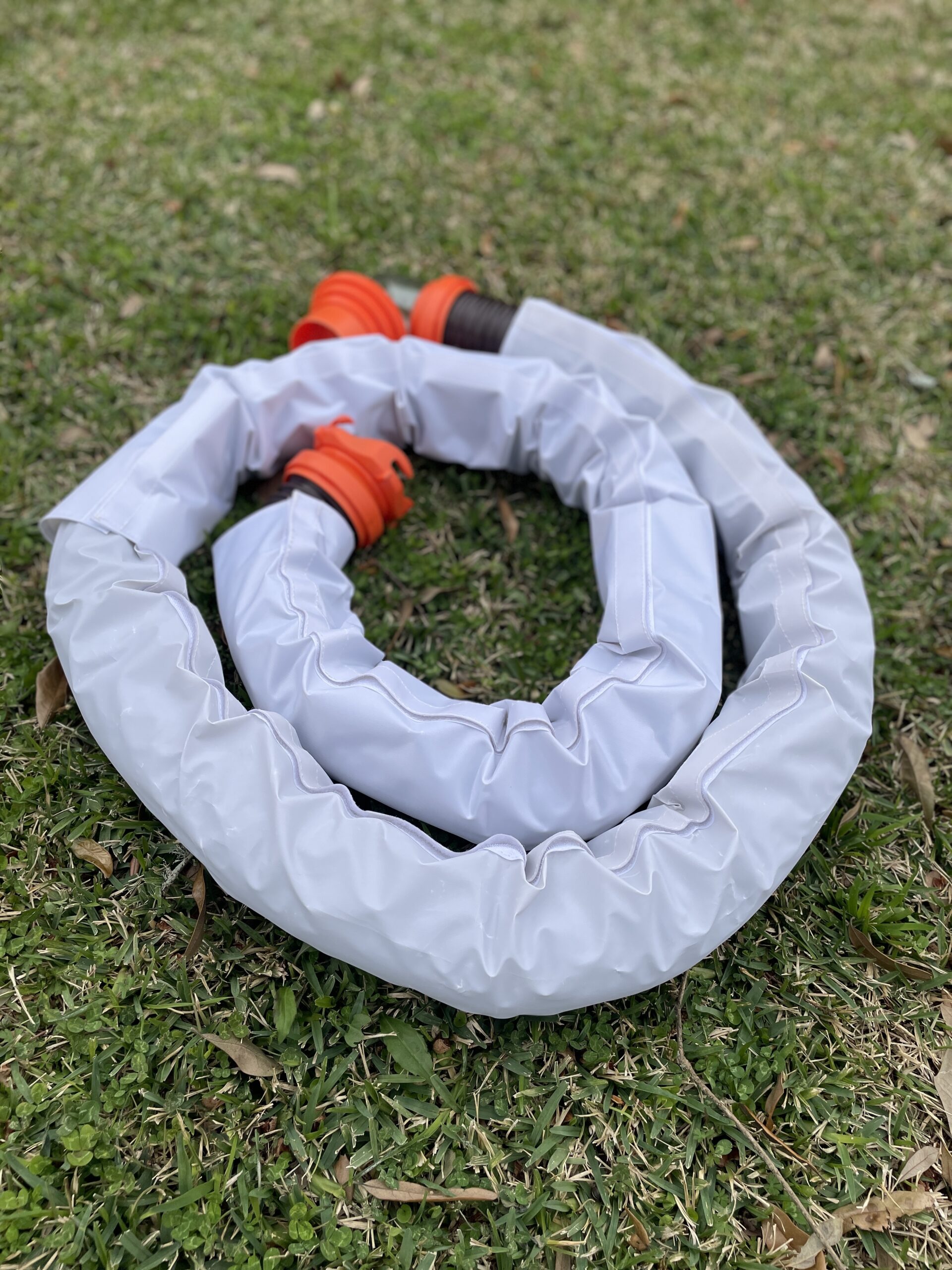
Why Using a Hose Cover Is Essential for Protecting Your RV Sewer Hose
Your RV sewer hose is one of the most important parts of your entire RV system — and also one of the most vulnerable. Sun, weather, critters, and freezing temperatures can all shorten its lifespan. That’s why more long-term campers and full-timers are turning to an RV hose cover to keep their sewer hose protected year-round.
Whether you’re parked for a weekend or for an entire season, a hose cover is one of the easiest ways to maintain your sewer hose and avoid premature damage.
A hose cover is a protective sleeve or wrap designed to go around your RV sewer hose while it’s hooked up at a campsite. Its purpose is to shield your hose from:
- Sun exposure
- UV degradation
- Temperature extremes
- Animal interference
- Dirt and debris
- Accidental snags or punctures
Unlike a support or holder, a hose cover is specifically about protection, not positioning or slope.
- Simplify content creation and ensure design consistency.
- Streamlines the design process and saves time.
- Pre-arranged collections of blocks.

1. A Hose Cover Shields Your Sewer Hose From UV Rays
Most RV sewer hoses are made of flexible plastic or vinyl, and both break down quickly under ultraviolet light. Even heavy-duty hoses can turn brittle or crack after extended sun exposure.
A hose cover provides:
- UV blocking
- Heat protection
- A barrier against early material breakdown
If you camp in the sun, on concrete pads, or in open RV parks, a hose cover is one of the best ways to extend your hose’s life.
2. Protects Your Hose From Critters and Physical Damage
Critters are surprisingly rough on sewer hoses. Birds have been known to poke holes in the ridges, while rodents sometimes chew on hoses looking for warmth or nesting spots.
A hose cover discourages pests by:
- Removing visual and scent cues
- Preventing access to the hose ridges
- Making the hose less inviting or accessible
It also provides a physical layer that helps protect from:
- Rocks
- Branches
- Lawn equipment
- Accidental foot traffic
3. Temperature Control — Especially in Cold Weather
If you camp in colder areas or during winter months, a cover can help prevent freezing. Even unheated covers insulate the hose enough to reduce temperature swings, and heated covers provide consistent warmth.
A hose cover helps:
- Prevent ice inside the hose
- Maintain smoother drainage in cold weather
- Keep fittings flexible
- Prevent freeze-related cracking
It’s one of the most effective ways to protect your sewer system in unpredictable temperatures.
4. Keeps Your RV Site Cleaner and More Organized
Covering your hose not only protects your equipment — it also improves the appearance of your entire RV site. By covering the hose, you keep the area tidy and reduce the visual impact of your sewer setup.
You also avoid:
- Mud building up on the hose
- Dirt getting into the hose ridges
- A grimy exterior you have to handle at dump time
A covered hose is easier to clean, store, and pack away.
5. Extends the Lifespan of Your Sewer Hose Significantly
Simply put: a cover saves you money. Replacing sewer hoses frequently is frustrating, especially when damage is caused by preventable issues like sun exposure or critters.
A hose cover keeps your hose protected from the most common causes of early failure, meaning:
- Fewer replacements
- Better overall sanitation
- More reliable performance
- Longer lifespan of your sewer equipment
Final Thoughts: A Hose Cover Is a Smart Upgrade for Every RVer
If you keep your RV sewer hose hooked up while camping, investing in a hose cover is one of the easiest ways to protect it. It blocks UV rays, discourages critters, reduces freezing risks, and keeps your site cleaner and more professional.
For RVers who want their equipment to last longer with less maintenance, a hose cover is a must-have upgrade for every campsite setup.
Tired of fighting your sewer hose setup? The Levitator suspends your hose above any terrain: no sags, no pooling, no smell. See how it works or shop the lineup.