
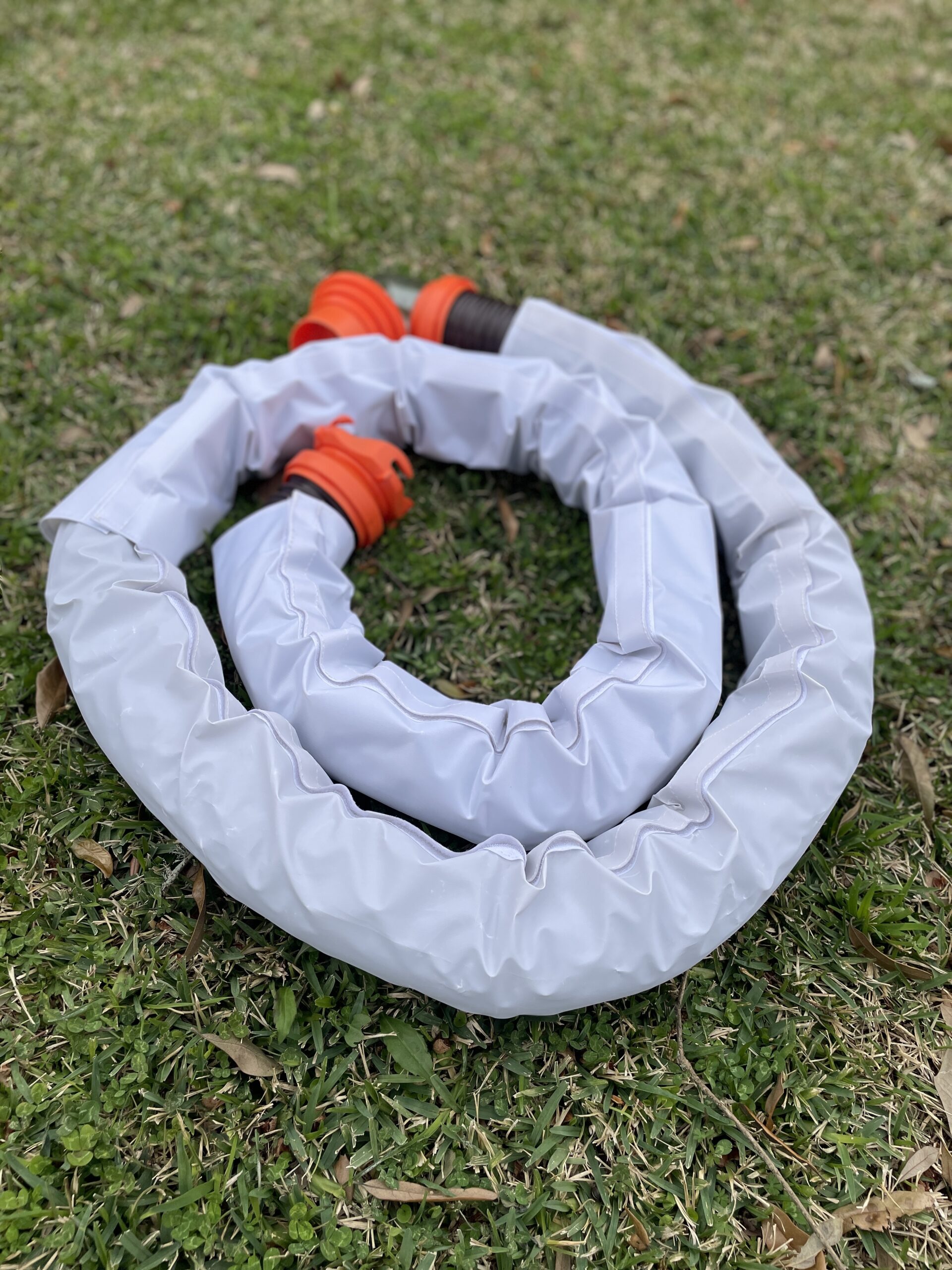
Why You Should Use an RV Sewer Hose Support (And Skip the External P‑Trap)
If you’ve spent any time around an RV park, you’ve probably seen it all: sewer hoses stretched across the ground, propped up with random objects, or fitted with DIY add‑ons meant to “improve” drainage. Two of the most common debates among RV’ers are:
- Is an RV sewer hose support really necessary, or can you just lay the hose on the ground?
- Do you need to add an external P‑trap to your sewer hose setup?
Let’s break down why using a proper RV camper hose support is important for cleanliness, safety, and campground compliance—and why adding an external P‑trap is not only unnecessary, but can actually cause serious problems.

Why Laying Your RV Sewer Hose on the Ground Is a Bad Idea
At first glance, laying your sewer hose directly on the ground might seem fine. Gravity still works, right? Not exactly.
When a sewer hose rests flat on the ground, it creates low spots and bellies where waste and liquids collect. Over time, this leads to:
- Poor drainage – Waste doesn’t fully evacuate the hose
- Buildup and clogs – Solids can settle and harden
- Strong odors – Standing waste equals lingering smells
- Messy disconnects – Trapped waste spills when you remove the hose
This isn’t just inconvenient—it’s unsanitary.
The Importance of Using an RV Camper Hose Support
An RV sewer hose support is designed to keep your hose elevated and sloped correctly from your RV to the sewer inlet. This consistent downward angle is critical for proper waste flow.
Key Benefits of an RV Sewer Hose Support
1. Proper Gravity Flow
A sewer hose support creates a continuous downhill slope, allowing waste to move efficiently instead of pooling in the hose.
2. Reduced Clogs and Buildup
When waste flows freely, solids don’t have a chance to settle and accumulate inside the hose.
3. Cleaner, More Sanitary Setup
Elevating the hose keeps it off the ground, reducing contact with dirt, standing water, and bacteria.
4. Easier Tank Dumping
With fewer low spots, dumping your black and gray tanks is faster, smoother, and far less stressful.
5. Campground Compliance
Many campgrounds and RV parks require the use of a sewer hose support. Using one helps you avoid warnings—or worse, being asked to relocate.
Simply put, an RV sewer hose support isn’t an accessory—it’s a best practice.
Do You Need an External P‑Trap on Your RV Sewer Hose?
Short answer: No.
Some RVers consider adding an external P‑trap to their sewer hose in an attempt to block odors. While this might sound logical, it misunderstands how RV plumbing systems work—and can create serious issues.
Your RV Already Has Odor Protection
Your RV’s plumbing system is designed with:
- Internal P‑traps under sinks and showers
- Holding tank seals
- Roof vent stacks that allow gases to escape upward
These components manage odors inside the RV. The sewer hose itself is not meant to function like household plumbing.
Why an External P‑Trap Can Be Dangerous
Covering your hose not only protects your equipment — it also improves the ap1. Waste Buildup Inside the Hose
A P‑trap holds liquid by design. In a camper sewer hose, that means:
- Solids can collect behind the trapped liquid
- Waste can dry and harden over time
- The hose becomes partially or fully blocked
2. Increased Risk of Backups
When you dump your black tank, it releases a large volume of waste quickly. If your hose contains a P‑trap or low spot, that surge may have nowhere to go.
The result?
- Pressure builds in the hose
- Waste can back up toward the RV
- In extreme cases, sewage can push back into your camper
This is not just unpleasant—it’s a serious sanitation hazard.
3. More Odors, Not Fewer
Ironically, trapped waste sitting in a warm hose can produce more odor over time, especially if it’s not flushed out completely after each dump.
The Correct Way to Set Up Your RV Sewer Hose
For a safe, clean, and effective sewer setup:
- Use a high‑quality RV sewer hose
- Place it on a durable RV sewer hose support with a steady downhill slope
- Avoid intentional low points, dips, or traps
- Fully flush the hose after dumping your tanks
This setup allows gravity to do its job—no gimmicks required.
Final Thoughts: Keep It Simple, Keep It Flowing
Using a camper sewer hose support instead of laying your hose on the ground is one of the simplest ways to improve your RV experience. It promotes proper drainage, reduces mess, minimizes odors, and keeps you compliant with campground rules.
Adding an external P‑trap, on the other hand, works against gravity and increases the risk of buildup and dangerous backups into your RV.
When it comes to RV waste systems, the rule is simple: maintain a steady downhill flow and let gravity handle the rest.
If you’re looking to upgrade your setup, a well‑designed RV sewer hose support is a small investment that can save you from big headaches later.